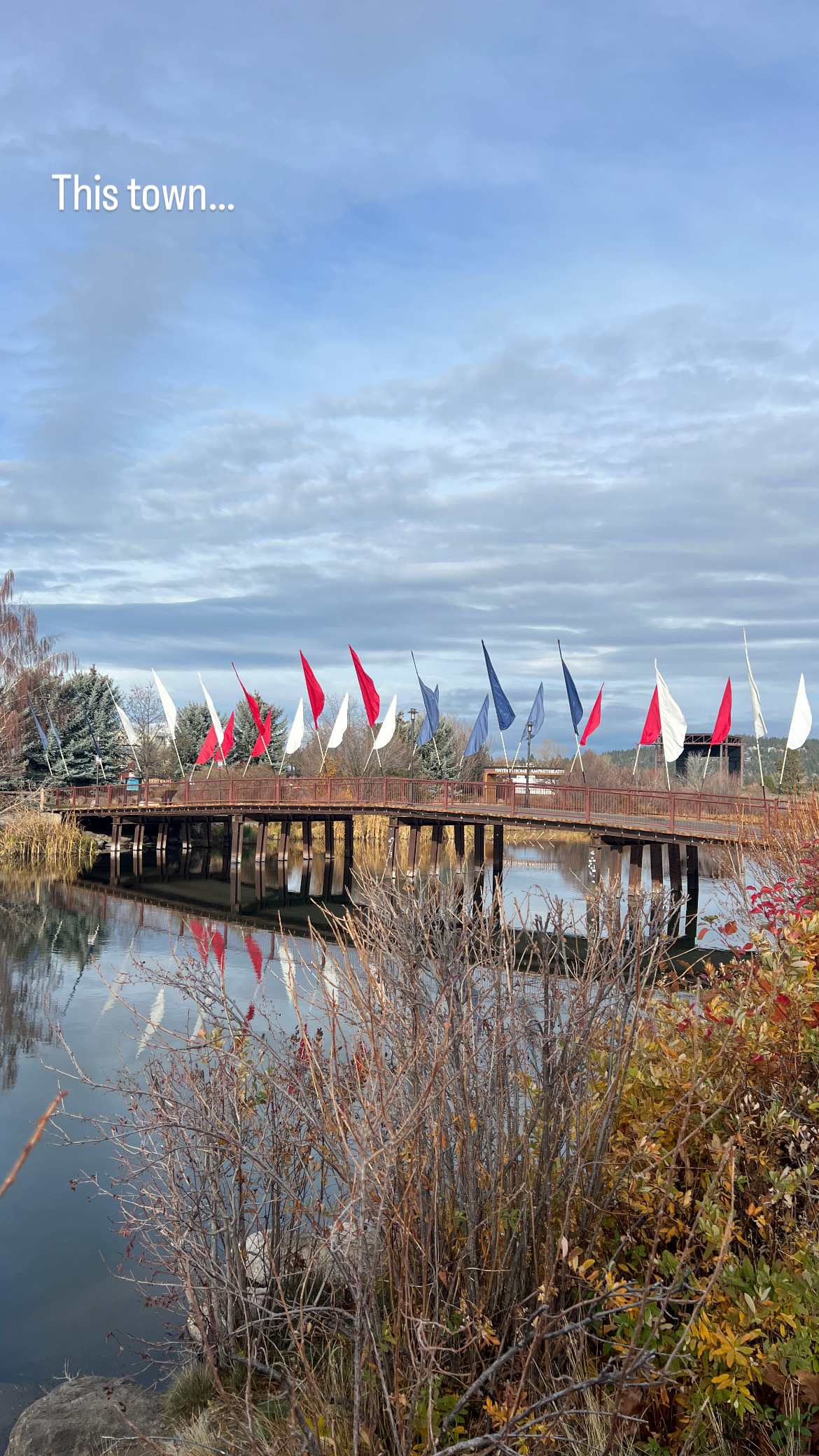
Short answer: Bend offers year-round outdoor recreation (skiing, hiking, mountain biking, and the Deschutes River), a walkable downtown, and a strong sense of community — but it also comes with a cost of living roughly a third above the national average, a housing market that’s competitive though normalizing, a small commercial airport with limited direct flights, and a labor market weighted toward tourism, healthcare, and remote work rather than large employers. It’s a great fit for people prioritizing lifestyle and outdoor access; it’s a harder fit for those needing a major-metro job market or the cheapest possible cost of living.
Pros and cons at a glance
| Pros | Cons |
|---|---|
| Year-round outdoor recreation (skiing at Mt. Bachelor, hiking, mountain biking, rivers) | Cost of living about a third above national average (index ~133, mid-2026) |
| Walkable downtown and Old Mill District | Limited direct flights from Redmond Municipal Airport |
| Strong sense of community, active lifestyle culture | Competitive housing market, especially Westside |
| Growing remote-work and tech-adjacent population | Smaller job market than major metros; fewer large employers |
| Excellent air quality most of the year | Wildfire smoke season (typically late summer) |
| No state sales tax | Higher state income tax |
| Relatively low effective property tax rate | Winters can be cold and icy, especially at higher elevations |
Practical things to plan around
- Housing. Decide early whether you’re renting first to test neighborhoods or buying immediately — see our Bend neighborhoods guide to understand the tradeoffs between Westside premium and Eastside value.
- Transportation. Bend is walkable in its core neighborhoods but largely car-dependent overall. Redmond Municipal Airport (about 20 minutes away) offers limited direct flights compared to Portland International.
- Employment. If you’re not relocating with a remote job, research Bend’s actual job market before assuming opportunities will match a larger city — healthcare (St. Charles Health System), tourism/hospitality, outdoor recreation brands, and a growing tech/startup scene are the biggest local sectors.
- Seasonality. Late summer often brings wildfire smoke from regional fires, which affects air quality for days or weeks at a time. Winters bring real snow and ice, particularly on higher-elevation streets.
- Healthcare access. St. Charles Bend is the primary hospital system; specialist access can require travel to Portland for less common conditions.
- Schools. Bend-La Pine Schools is the primary public district; research specific school boundaries tied to any neighborhood you’re considering, as boundaries don’t always align with neighborhood names. My Bend schools guide can help.
Who tends to thrive in Bend
- Remote workers who want outdoor access without sacrificing walkable urban amenities
- Retirees prioritizing an active lifestyle
- Families relocating from higher-cost coastal metros looking for more space at a relative discount
- Outdoor recreation enthusiasts (skiing, mountain biking, climbing, fly fishing)
Who should think twice
- Anyone needing in-person access to a large corporate job market
- Buyers with a tight budget who need the cheapest possible cost of living
- Those sensitive to wildfire smoke season or long winters
Local context
Bend sits at about 3,623 feet elevation on the eastern edge of the Cascade Range, which gives it a high-desert climate — sunnier and drier than Portland, with 300+ days of sunshine a year, but colder winter nights than the Willamette Valley. The Deschutes River runs through the center of the city, and Mt. Bachelor (about 30 minutes away) anchors the region’s ski and summer recreation economy. Understanding this geography helps explain both the appeal and the cost: Bend’s outdoor access is genuinely rare for a city its size, and that scarcity is priced into the real estate market.
FAQ
Is Bend, Oregon a good place to raise a family? Many families find it appealing for the outdoor access, community feel, and Bend-La Pine school district, though it’s worth researching specific school boundaries and comparing against your current location’s cost and amenities.
What is Bend’s population and how fast is it growing? Bend has grown substantially over the past two decades, driven largely by in-migration from higher-cost West Coast metros, and continues to see steady population growth, which is part of why housing supply has struggled to keep pace with demand.
Does Bend have good job opportunities? The job market is smaller than a major metro, concentrated in healthcare, tourism, outdoor recreation, and a growing remote/tech-adjacent population. It’s worth having a job or remote work plan secured before relocating rather than assuming ample local opportunities.
How does Bend’s climate compare to the rest of Oregon? Bend’s high-desert climate is notably sunnier and drier than Portland or the Willamette Valley, with cold winters and warm, dry summers. It gets meaningful snow in winter but generally less rain overall than western Oregon.
Planning a move? Download my free Bend Relocation Guide or book a call.
Written by Lindsay Lyon, a Bend, Oregon real estate agent. This overview reflects general 2026 conditions; visit and research current specifics (schools, employers, neighborhoods) directly before finalizing a relocation decision.